Tree Planting in Twin Falls, ID
Almost every tree in Twin Falls was planted by someone, because the land here was sagebrush before the canal water came. We plant new trees in local yards, choosing species that tolerate alkaline soil and spring wind, and setting them up with water and support so they grow into real shade.
Talk to us now:
(208) 886-5769Get a free estimate
Tell us what the tree is doing. We answer during business hours, usually same day.
Form powered by Splitforms.
- Licensed
- Insured
- Free estimates
- Emergency response
Pick a tree that likes it here
The Magic Valley is high desert. Rainfall is low, summers are hot and dry, winters are cold, and the soil is usually high in lime with a high pH. That last point catches people out. Trees that come from acidic soil cannot pull enough iron out of alkaline ground, and their leaves turn yellow between green veins, a problem called iron chlorosis. Pin oak, red oak and silver maple are classic examples that often struggle in southern Idaho for that reason.
Trees that generally do better here include hackberry, thornless honeylocust, bur oak, Kentucky coffeetree, ginkgo, Amur maple and Amur corktree. For evergreen screens, some pines and junipers handle the dry wind well. The best choice depends on how much room you have, whether the spot is on lawn sprinklers or a drip line, and how much the wind hits it.
Dig the hole for the soil you actually have
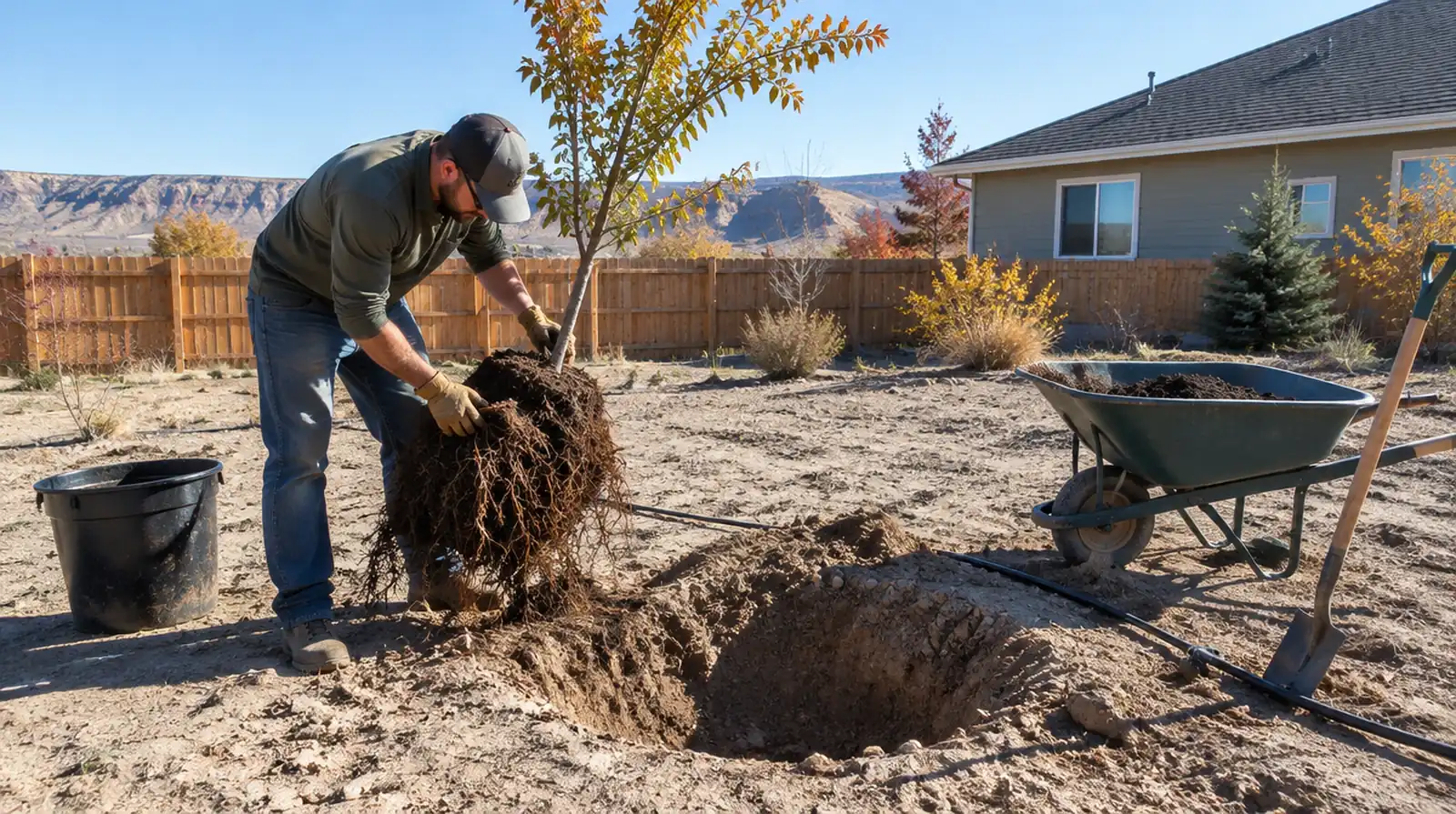
Some lots have deep silt loam. Others hit hard caliche or basalt a short way down, especially closer to the canyon rim. If we run into a hard layer, we break through it where we can or choose a smaller tree with a shallower root system. A planting hole cut into hardpan can turn into a bathtub that holds water and drowns the roots.
We set the root flare at grade, never buried, and make the hole wide and shallow. Container-grown trees often have roots circling the inside of the pot. Those get loosened or cut so they grow outward instead of strangling the trunk in a decade. We backfill with the native soil rather than a rich mix, which keeps roots from staying in a pocket of soft soil.
Wind and staking
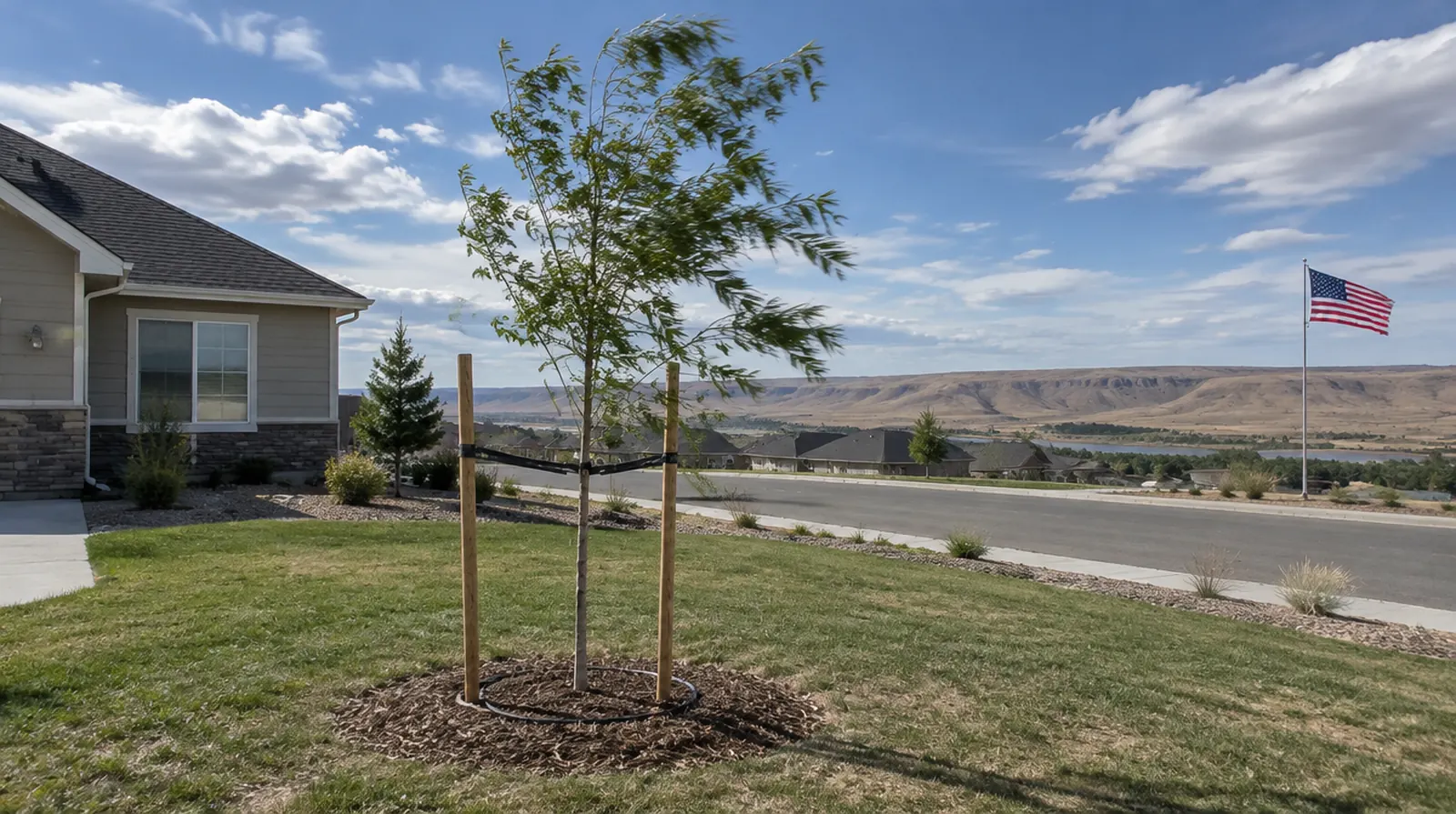
Spring winds across the Snake River Plain can rock a new tree hard enough to break fine roots before they anchor. Exposed lots in newer subdivisions get the worst of it. We stake trees that need it with two or three stakes and wide, flexible ties set low on the trunk, so the tree can sway a little, which builds trunk strength, without tipping. Stakes come off after one growing season. Left on too long, ties can girdle the bark.
Water is everything
A lawn sprinkler schedule is not enough for a new tree. Short, frequent sprinkling keeps water near the surface, and the root ball of a new tree can dry out even when the grass looks fine. We set up a drip ring or emitters around the root ball and expand them as the tree grows. During the first couple of summers, the tree needs a deep, slow soak on a regular schedule. Water in fall before the ground freezes, and on mild, dry winter days if the ground is not frozen. Winter drought injury is common here.
If you are on canal irrigation through a pressurized system, check when the water shuts off for the season and plan hand watering for the gap.
Timing
Early spring and early fall are the best times to plant. Fall-planted trees have weeks of cool soil to grow roots before the next summer. Avoid planting in the heat of July unless you can water every day or two.
Sunscald and critters
Thin-barked young trees can crack on the southwest side when bright winter sun warms the bark and a cold night freezes it. A light-colored trunk wrap for the first few winters helps. Rabbits and voles chew bark under snow, so a loose guard around the base is worth adding in open areas.
Questions
Can you plant where an old tree was removed?
Yes, usually a few feet to the side after grinding the stump.
How fast will it grow?
With good water, honeylocust and hackberry can put on noticeable growth each year. Oaks and coffeetrees are slower but last a long time.
My new tree has yellow leaves. Now what?
It could be overwatering, underwatering or chlorosis. Our tree health visits can figure it out.
Want shade on that west wall?
Free planting consultation anywhere in Twin Falls. Tell us about the spot and we will suggest a few trees.