Emergency Tree Service in Twin Falls, ID
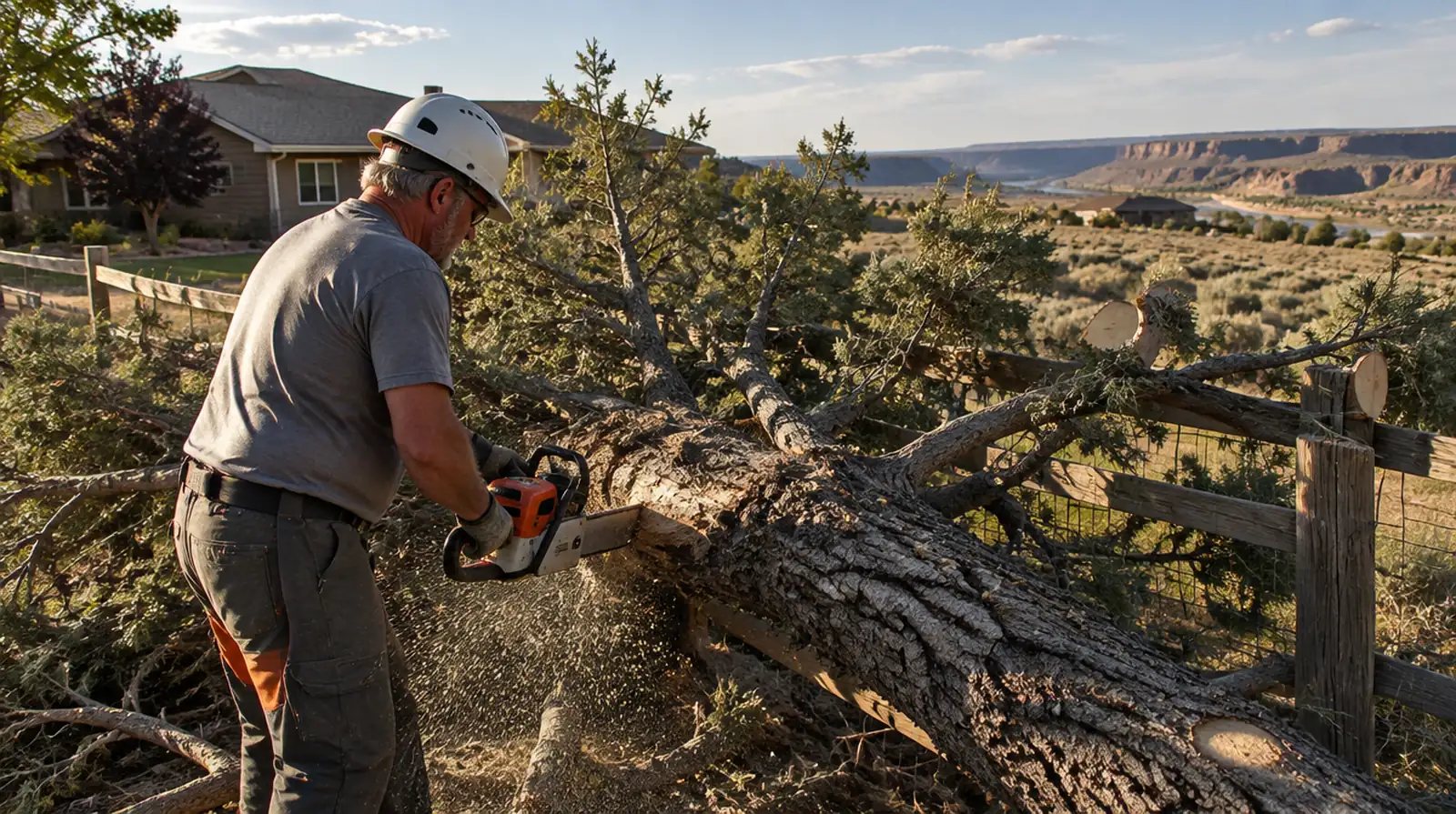
A tree came down and it is on something it should not be on. Call us. We stabilize the situation first, get the load off your house or your car, and clear the rest once it is safe.
Storm damage right now:
(208) 886-5769Get a free estimate
Tell us what the tree is doing. We answer during business hours, usually same day.
Form powered by Splitforms.
- Licensed
- Insured
- Free estimates
- Emergency response
Before you call, do these three things
Stay away from anything touching a wire. Assume every downed line is live and assume the tree touching it is energized too. Do not walk under it, do not move the limb, and do not let the dog out. Report the line to the power company first, then call us.
Get people out from under the tree. If a trunk is resting on the roof, nobody sleeps in that room and nobody stands under it to take a photo. A tree that has already moved once will move again.
Take pictures from a safe distance. Wide shots and close shots, before anything is touched. Your insurance company will want them and you cannot recreate them after we clear the yard.
What brings trees down in Twin Falls
Storm work here follows a calendar, and after a few seasons you can almost predict the phone calls.
Spring wind on saturated ground. This is the big one. Yards get watered heavily as soon as the canal season starts, the soil turns soft, and then a strong wind pushes across the open flats. Trees with the shallow root plates that irrigation encourages tip over whole. The lawn lifts in a circle around the trunk and the tree lays over. We pull more trees off fences in May than any other month.
Summer downbursts. A thunderstorm cell collapses and dumps a straight-line gust onto one or two blocks. Everything shreds in the same direction. Siberian elm and silver maple are almost always the casualties.
Early hard freezes. When the temperature drops through the twenties in October while the maples and ash still hold their leaves, ice loads onto foliage that should have already dropped and limbs come off under weight the tree was never built to carry.
Wet, heavy winter snow. Not the dry powder, the dense stuff that comes with a warmer storm. It settles into evergreens, splays blue spruce and arborvitae open from the center, and snaps out horizontal limbs on deciduous trees.
How we work a storm call
The first thing we do is decide what is holding what. A tree lying across a roof is a system under load, and cutting the wrong piece first is how the rest of it comes through the ceiling. We look at where the pressure is, set rigging to control what moves, and take weight off in the order that keeps the load going the direction we chose.
Then we clear. Access first, so you can get a vehicle out and so people can reach the doors. Structure next. Fence and yard last. If it is dark and the situation is stable, we will secure the site and come back with daylight rather than run saws over your roof at midnight.
Insurance, and what to expect
Most homeowner policies pay to remove a tree once it has damaged a covered structure. A tree that fell in the middle of the yard and hit nothing is usually on you. Coverage varies, so call your agent before you assume either way.
We document as we go: photos of the tree in place, photos of the damage, and an itemized invoice describing the work in the language adjusters expect. You are welcome to hand it straight to them.
One thing worth saying plainly. After a big wind event, out-of-town crews show up with a truck and a chainsaw and knock on doors. Ask any of them for a certificate of insurance before they climb anything on your property. If they cannot produce one, an injury in your yard becomes your liability.
After the emergency
Once the immediate hazard is gone, there is usually a second conversation. A tree that lost a third of its canopy sometimes recovers and sometimes does not, and the honest answer depends on what broke and where. If it needs to come out, we schedule a planned removal on a normal schedule rather than charging emergency rates for work that can wait a week.
There is also whatever is left in the ground, and we can handle the leftover stump on a separate visit. And for the trees still standing, the cheapest insurance is clearing the deadwood that usually breaks first before the next storm rather than after it.
Call the number above any time. Storm calls do not wait for office hours.
Tree down right now?
Call. Do not wait for a form to be answered.