Tree Disease Treatment in Twin Falls, ID
A tree in trouble gives you months of warning. Yellow leaves, dead tips, branches dying from the bottom up. We come read the symptoms, tell you what is actually causing them, and treat the ones worth treating.
Talk to us now:
(208) 886-5769Get a free estimate
Tell us what the tree is doing. We answer during business hours, usually same day.
Form powered by Splitforms.
- Licensed
- Insured
- Free estimates
- Emergency response
The problems we actually find in Twin Falls yards
Yellow leaves with green veins
This is the single most common call we get, and it is almost never a watering problem. The soil here is alkaline and full of lime, and high pH locks up iron and manganese so the tree cannot pull them out of the ground even though they are physically present. Silver and red maple, pin oak and river birch show it worst. Leaves go pale yellow while the veins stay green, then edges brown and curl by August, then the branch tips start dying back.
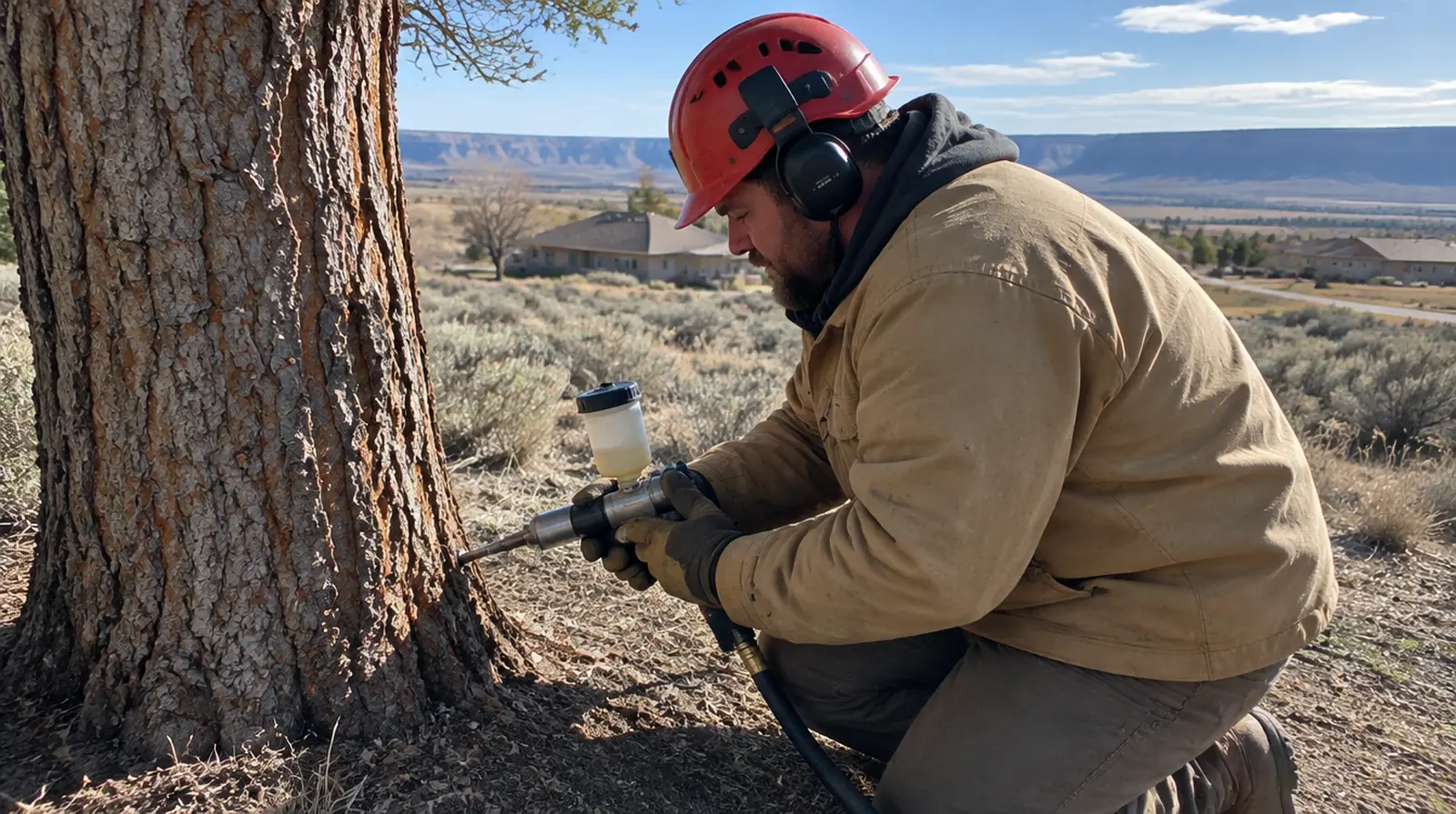
Throwing iron on the lawn does almost nothing, because the soil locks that up too. What works is getting a chelated form of the nutrient past the soil entirely, either injected into the trunk or placed in the root zone in a form the high pH cannot tie up. Trunk injections generally hold for two or three seasons. It is a management program, not a cure, because we are not going to change the pH of your whole yard.
Blue spruce dying from the bottom up
Colorado spruce were planted in enormous numbers around here and they were never really built for this climate. Cytospora canker takes the lowest whorl of branches first, then the next one up. The needles go purple-brown and drop, and you find white, chalky sap crusted on the bark where the branch meets the trunk.
There is no spray that cures it. What helps is reducing the stress that lets it in: consistent deep water in the dry months, mulch instead of lawn right up to the trunk, no string trimmer damage on the base, and removing the infected limbs in dry weather so it stops moving upward. Trees caught early hold on for years. Trees where the bottom third is already gone usually do not.
Thinning, dying ash
Ash is everywhere on the older streets and a lot of it is struggling. Ash-lilac borer tunnels under the bark and leaves wet, cracked, rough patches on the lower trunk. Drought stress and old, poor pruning cuts open the door. Symptoms show as a thin crown, dead tips at the top, and shoots sprouting low on the trunk where the tree is trying to start over.
We treat borers with correctly timed applications and we improve the water and mulch situation, because a well-watered ash resists borers a lot better than a stressed one. Ash also deserves a closer look than most species right now given how much damage emerald ash borer has done as it has spread west. If we see anything that fits that pattern, we tell you immediately.
Elm going brown branch by branch
Dutch elm disease shows up as a single branch flagging yellow and brown in early summer while the rest of the tree looks fine, then another branch, then another. Cut a wilting twig and you find brown streaking in the wood just under the bark. Fast removal of infected wood is the only real response, along with not creating fresh pruning wounds during beetle season.
Sticky cars, black leaves, ants on the trunk
Aphids and scale. They feed on sap and rain honeydew down onto everything below, then a black sooty mold grows on the sticky film. It looks alarming and it is mostly cosmetic on a healthy tree, but on a young or stressed one it is worth treating.
Black shoots on pear, apple and crabapple
Fire blight. Shoot tips die suddenly and curl over in a hook, and the blackened leaves stay attached like the branch was scorched. It moves fast in warm, wet spring weather. Infected wood gets cut well below the visible damage, in dry conditions, with tools sanitized between cuts.
What a visit looks like
We look at the whole tree and the whole site, not just the symptom you called about. Where the yellowing sits in the canopy, which branches went first, what the bark is doing at the base, how deep the mulch is piled against the trunk, whether the root flare is buried, where the sprinklers throw, and what changed on the property in the last few years. Trenching for a new driveway three summers ago explains a lot of slow declines.
Then you get a straight answer. Some trees need a treatment program. Some need water and mulch and nothing else. Some need thinning and deadwood removal to take the load off while they recover. And some are far enough gone that the responsible move is to take the tree out before it fails rather than spend three years treating something that will not come back.
If a diseased tree does come out, we generally recommend grinding the old root plate out as well, so decay organisms are not left sitting in the ground where you want to plant something new.
Call and describe what you are seeing. Photos help. The earlier we look at a declining tree, the more options you have.
Not sure what is wrong with your tree?
Free diagnosis visit anywhere in Twin Falls.